
Our Ocean of Peace – Demilitarised, Decolonised, Denuclearised
Jun 10, 2026
story
Seeking
Visibility
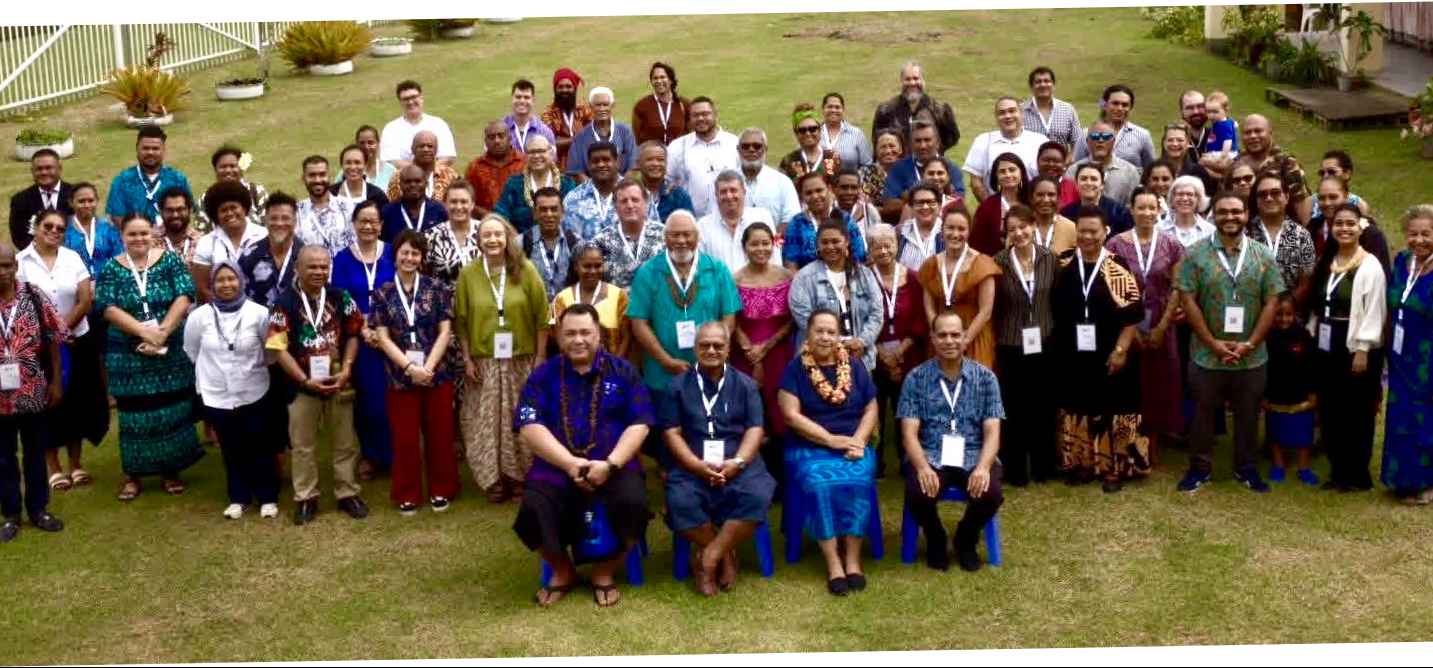
Photo Credit: Pacific Network on Globalisation(PANG)
Pacific Island civil society and allies meeting in Fiji this week
The State of the Pacific Ocean Convening this week in Suva arrives at a decisive moment as Pacific peoples are confronting intensifying pressures on the ocean that sustains life, identity, mobility, spirituality, and livelihoods. Climate change, biodiversity loss, marine pollution, extractive industries, and rising geopolitical competition are not separate crises; they are interconnected forces shaping the future of the region.
The Convening, that opened in Suva on World Oceans Day (June 80, has already highlighted the urgency of renewing the Pacific’s relationship with the ocean and of defending ocean governance as a matter of justice, responsibility, and collective survival.
That conversation is deeply connected to the work of GPPAC Pacific, which advances a demilitarised, decolonised and denuclearised vision of peace and security rooted in human security and community leadership.
This connection matters because our Pacific Ocean is not only an environmental space; it is also a political and peacebuilding space that calls for a fundamental shift away from treating the ocean as an object of extraction and toward embracing it as a living source of relationship and belonging. It is a collective affirmation of the insights of Epeli Hauʻofa and Teresia Teaiwa that Pacific peoples are part of a “sea of islands,” connected through movement, culture, and responsibility rather than divided by distance.
That framing is also at the heart of our network. GPPAC Pacific and the Pacific Women Mediators Network. Our members link peacebuilding with climate justice, ecological wellbeing, gender-inclusive conflict prevention, political self determination, and demilitarised and decolonised financing.
Our revitalised GPPAC Pacific - Pasifika Peace Talanoa platform is not simply a space for dialogue—it is a political and community imperative for transforming peace and security in the Pacific.
It asserts the leadership of Pacific women, youth, LGBTQ+ communities, persons with disabilities, faith and traditional leaders, and civil society in confronting the root causes of conflict, inequality, and militarisation. Grounded in lived realities and collective action, Pasifika Peace Talanoa strengthens accountability, amplifies voices too often excluded, and advances a bold Pacific vision of peacebuilding that is feminist, decolonial, intergenerational, and people centred.
This is our collective platform to reshape power, protect our ocean and communities, and ensuring that peace in the Pacific is defined not by states and militaries, but by Pacific Island people who sustain it every day.
So, the State of the Pacific Ocean Convening is not just an environmental gathering. It is also a peacebuilding forum, because the struggle over the future of the ocean is inseparable from questions of sovereignty, security, and justice.
The convening is a learning exchange with discussions deepening our understanding of the impact of deep seabed mining, marine pollution, climate displacement, and competing geopolitical interests that affect social cohesion, local livelihoods, and the dignity of communities whose security depends on healthy marine ecosystems.
The convening is affirming that when Pacific leaders, faith communities, academics, and civil society actors gather to debate ocean governance, they are also shaping the terms of peace in the region.
This is precisely the kind of multi-stakeholder dialogue that GPPAC Pacific has long advocated for, if our region is to move beyond reactive, militarised approaches to security.
One of GPPAC Pacific’s most important contributions has been to insist that peace in the Pacific must be shaped by those who sustain it daily, especially women, young people, faith leaders, and communities whose voices are often marginalised in formal policy spaces.
The Pacific Women Mediators Network continues to support the meaningful participation of diverse women in mediation, negotiation, and peacebuilding processes, because women are not simply beneficiaries of peace processes but essential architects of preventive diplomacy, community resilience, and inclusive governance.
This is critical as the Pacific Islands Forum develops the Regional Action Plan on Peace and Security is developed to ensure peacebuilding capacities, local networks, and sustained civil society engagement are indispensable if such declarations are to have real meaning in people’s lives.
The State of the Pacific Ocean Convening is more than a timely reflection on the condition of the ocean. It offers a platform to deepen a Pacific understanding of security itself. If the ocean is central to life, then protecting it must also be central to peacebuilding.
If climate harm, pollution, extractivism, and militarisation destabilise communities, then ocean governance must be guided by justice, prevention, and accountability.
And if the Pacific is to remain a region defined by its own values rather than external agendas, then civil society leadership must be treated as essential rather than optional.
A Peacebuilding Nexus approach that links SDG5, 14 and 16 can address the disproportionate impact of conflict and crises, including the humanitarian, climate and ecological crises on women and girls in all their diversities highlights the need for inclusive justice, legal protections against violence, and strong, accountable institutions.
Together we are sharing a vision, understanding and embedding peacebuilding practice inclusive, intergenerational, and culturally grounded in collective action including Ocean Governance to ensure actions are rooted in community, justice, and affirmation of life and self-determination.
- Peace & Security
- Environment
- Earth Emergency
- Behind the Headlines
- Peace Building
- Climate Change
- Global