
Memory of a Lost Home
Jun 9, 2026
story
Seeking
Visibility


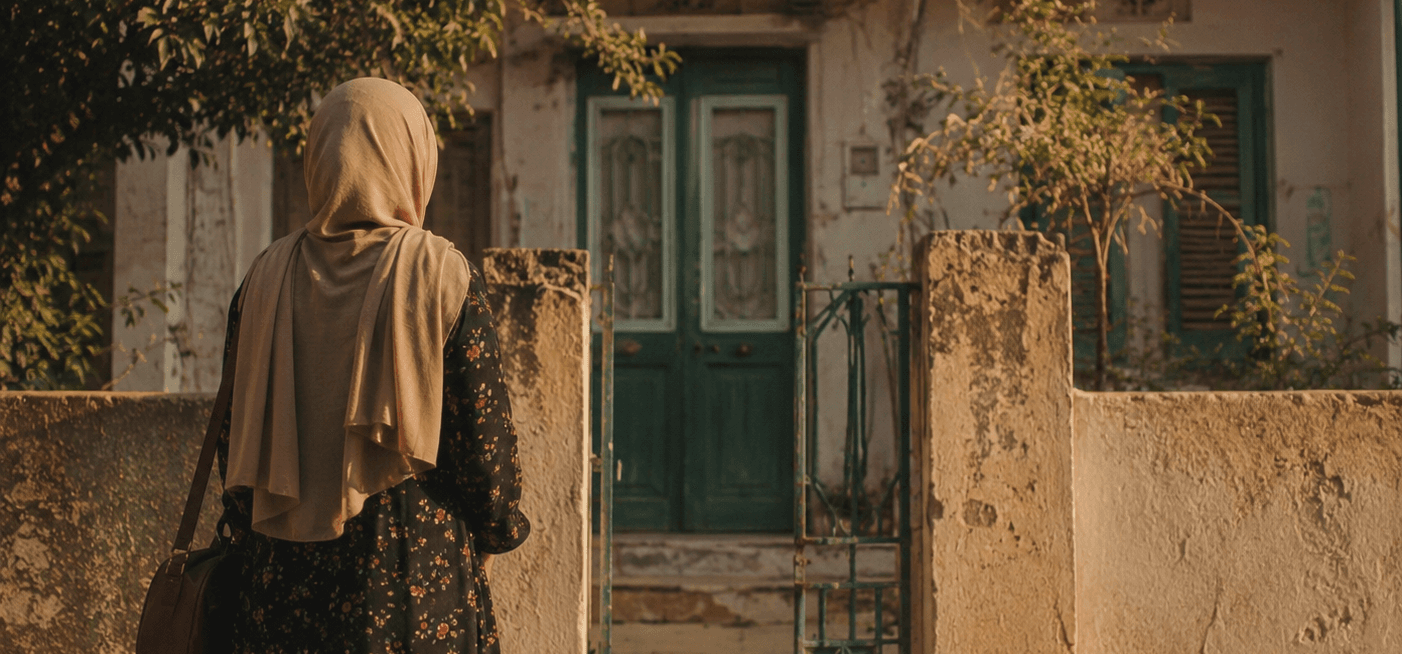
I am a woman who lost a home that was never just walls, but a complete memory of love and small details. I lost the street that witnessed a revolution against a dictatorship—University Street, once filled with chants and hope, and later filled with absence.
Memories of thousands of martyrs pass before me, as if their souls are still walking among us in the streets, while our tears fall every time their names, images, or the stories of young lives unfinished appear.
I worked in politics and news, writing daily about death, shelling, explosions, and cities being erased—about people who are buried twice: once in the ground, and once in memory.
Then came the closest losses: my family, neighbors, loved ones… some lost to forced exile, some to illness, some to imprisonment, and some became abducted or forcibly disappeared, with no voice and no trace.
Still, I tried to resist. I founded the “Noura” initiative, supporting people in all aspects of life, trying to spread light for children in Sudan and across the diaspora.
I also worked at a Human Training Academy, offering guidance and steps for psychological resilience, helping people adapt to pain and continue. Over time, I became experienced in solving all kinds of problems—psychological, financial, professional, and social—as if life itself forced me to learn how to hold others up while I was barely holding myself.
My life is no longer a normal life.
It has become endless cycles of news: a morning headline, midday updates and conversations, evening reports, and in between, a war that never stops in the background—as if time itself is no longer days, but an unending loop of crisis.
There is a network of friends I return to when everything becomes heavy; together we try to create meaning in the chaos.
The call to dawn prayer reminds me every day that I am far from my homeland. It tells me to rise again—as if it says not only “come to prayer,” but also: rise, awaken, strive, for success is waiting despite hardships and barriers.
I try to continue: online training courses, or long journeys across distances and hours for learning. My work often extends beyond midnight. My life has become work, writing, and survival.
My poems come only after moments that shake me—through overflowing tears and overwhelming longing. My stories come only after people fall asleep, in the silence of midnight, when silence itself begins to speak.
I no longer truly know who I am. I exist only in the role of helping, at every level.
I am exhausted by the news of war, by life in war, and by stories of war.
When will peace come? When will I return to my trees, wake up to the sound of the nightingale at dawn, and go back to the Nile of Omdurman that lives inside me before I ever see it?
I long to visit my grandfather’s grave at his tall dome, where devotees in white garments and brown belts stand in long rows, their voices rising in remembrance, glorification, and prayers upon the Prophet ﷺ.
I long to wear the Sudanese patterned dress and attend a wedding fully adorned, to hear the rhythms of the dalooka that document the joy of young women and weddings filled with dignity and pride.
Organizations try to support us as journalists, offering psychological training and assistance, but I have returned to my old habit: I carry only my phone, a pen, a notebook, and my house key.
I wear jeans and sneakers, running more, writing more, working more, helping more.
I can no longer speak as I once did. I don’t know what people say anymore, and I no longer engage in social conversations—the burden is too heavy for everything else.
Sometimes I buy makeup and creams, only to leave them unused, as if I am searching for something that never stays. Am I dissatisfied, or simply living in a state that has no name?
I tried to obtain a scholarship to travel to Europe to write, but I could not.
I have been drowning for years—not days or months—and no one knows when it will end.
No one knows when the war will end, or when flocks of doves will return to the balconies of the Grand Mosque in Khartoum.
When my former editor—whom I once worked with—died in a tragic accident, leaving behind his children, I could not write his eulogy. At the funeral, my tears froze in place.
It was as if the ice I poured over my heart had expanded, and the resilience I wear like a hat has begun to suffocate me instead of protect me.
But I still write…
Because writing is the only thing that keeps me standing when everything inside me is exhausted.
And my identity is no longer an answer… but an ongoing attempt to survive.
And there is still one question that never leaves me:
When will the homeland return to life?
- Peace & Security
- Girl Power
- Caring for Ourselves
- Behind the Headlines
- Global