
CAMEROON: I Bled in Silence Because of Menstrual Stigma
Jul 22, 2026
story
Seeking
Encouragement
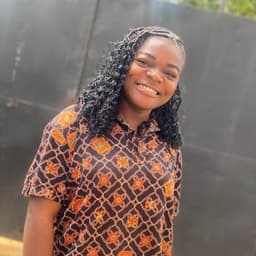

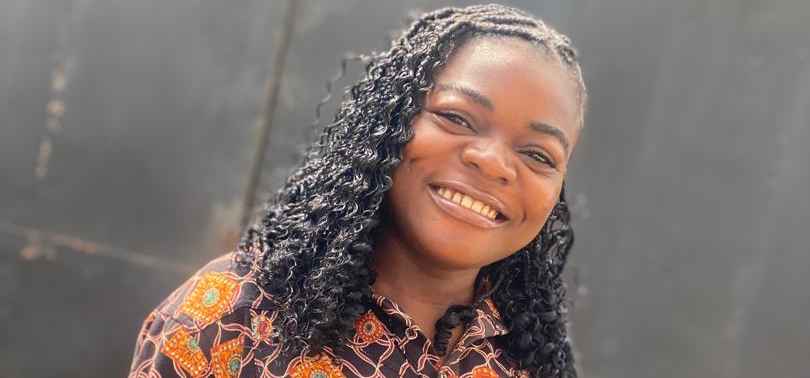
Growing up in rural Cameroon, Aurelia Njang learned about menstruation by listening to other girls at boarding school. When her first period finally came at 15, she had no pads and no one to turn to.
“I wish more than anything else that menstruation is no longer a hushed discussion.”
Recently, I asked an older lady I know if she would buy reusable pads. Her answer was a firm NO. That surprised me but made me curious so I asked her, "Why?"
Her response took me back to my journey as a woman.
"I can't use a pad that was used by someone else,” she said. It made sense from a hygiene point of view, but this doesn't mean reusable pads are previously used by someone else. Yet most women in rural communities don't know this. If women lack accurate information, how will they teach their girls?
As a young girl who grew up in a rural community, I didn't know anything about menstruation until I went to a boarding school at the age of ten. There were older girls in my class and throughout the school, and I learnt about menstruation by listening to them.
I heard them share their experience and witnessed how they went through it. I wondered why others went to the hospital frequently because their periods lasted more than a week. I got curious why some girls used one pad and others two.
Our school uniform was white and blue, so when someone’s period stained her clothes, it was so obvious and difficult to hide.
It was a mixed boarding school. Having boys around sometimes made the experience even more embarrassing. No one spoke about these issues openly, but as girls, we saw what happened. At one point I was scared. At other times, I was relieved I wasn't menstruating yet.
I couldn't talk to anyone about it because my Mum never asked me whether my period had begun, nor did she buy pads for me to keep in preparation.
At the age of 15, I was probably the only girl in my class who had not seen her period. I didn't tell anyone, but I was low-key glad that maybe I would never menstruate, as though I were somehow special. But then, I was very scared because what if I was suffering from an illness? By the way, the biology lessons taught us the science of menstruation, but these did not teach us how to handle the fear, shame, confusion, or the realities that come with it.
The biology discussions on menstruation usually ended with laughing and jeering. As a result, I was too timid to get myself involved in such a situation.
Then my worst fears came to pass.
My first period finally came while I was preparing to write my Ordinary Level. A few days before the exam itself, I didn't have a pad. I wasn't prepared for it.
Worst of all, it came with an incredible amount of pain that I had never experienced before in my life. I cried, rolled on the floor, and nothing else mattered.
Thank God only the students preparing for examinations were still at school at the time. A few classmates gave me pads, and I realised then that I might have been the last in my class to begin menstruating.
I never told anyone about it. From then on, I would quietly use my pocket money to buy pads or write it in my school list every time I was preparing for school.
When I had the opportunity to go to a day school, the secrecy around menstruation was at its peak. A girl would suddenly say she was sick, then slowly make her way to a discipline master to ask permission to go home.
I didn't experience that until once when I had my period at school, and the cramps were so painful I could barely sit.
After struggling for over an hour, I was able to meet a male discipline master, who asked nonchalantly, "Is it menstrual cramps? I have the medicine for it, and you don't have to go home."
He didn't bother to ask whether I had a pad or not. At least he gave me medicine, but it still didn't help.
I still had to find another male discipline master and explain to him I wasn't feeling well. In that particular incident, I really ended up going to the hospital because of the cramps.
Going back to the rural communities now, I see nothing has changed at all. Many girls still struggle to get pads, and no one really explains to most girls what is happening in their bodies.
Most girls suffer in silence because of stigma and mockery. Some completely stay out of school during their periods. Others miss lessons because they can't get pads at school. For girls whose families are already struggling, buying menstrual products can mean sacrificing another basic need.
I was shocked when I first heard the phrase “sexually transmitted pads. Yes, some girls are pushed into transactional sex so they don't have to beg for pads when menstruating.
The ongoing conflict in my country has really made the situation worse. In response, we launched a new project called Pad a Girl to ensure we end period poverty in schools, particularly in rural communities.
Our goal is to educate communities about menstrual hygiene and provide girls with basic menstrual health kits. We want girls to experience their periods with confidence and dignity.
Now, my hope is that we move beyond simply celebrating menstruation as a milestone into womanhood and begin intentionally preparing girls for the journey that follows.
Every girl deserves to understand her body, the hormonal and emotional changes she will experience, and how to manage menstruation with confidence, dignity, and accurate information. No girl should have to learn about her body through fear, silence, or embarrassment, as I did.
Ending period poverty requires more than providing pads. It requires parents who are willing to have honest conversations, schools that create safe and supportive environments, health workers who educate without judgment, policymakers who prioritize menstrual health, and communities that refuse to let stigma silence another generation of girls.
Through Pad a Girl, we are working toward that future in rural Cameroon, but lasting change requires all of us.
Each one has a role to play, whether you are a parent, teacher, health professional, policymaker, donor, or advocate. When we work together, we can ensure that no girl is ashamed of her body, no girl misses opportunities because of her period, and every girl experiences menstruation with dignity, knowledge, and hope.
STORY AWARDS
This story was published as part of World Pulse's Story Awards program. We believe every woman has a story to share, and that the world will be a better place when women are heard.
- Our Impact
- Salud menstrual
- Featured Stories
- Global