
A Conversation Just Beginning: - Powering Healthier Tech
Jul 26, 2026
story
Seeking
Collaboration


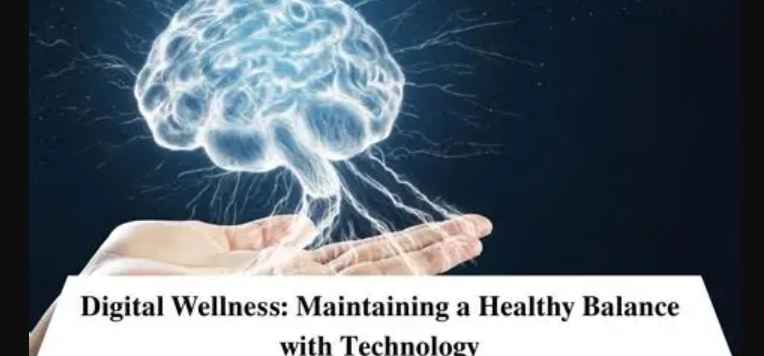
New tech:- How to strike the Right balance?
When I think about where this technology is taking us right now, one image keeps coming back to me: a line of jetskis trailing behind a massive speedboat. We're holding onto the tow rope, engines idling, water churning all around us. We aren't steering. We're just trying not to let go. The boat dictates the speed and the direction, and our entire job is simply to stay attached.
That is honestly how I feel a lot of the time. When Morgan Martin, Simone Lima, Leslie Funk, and I gathered on July 14th for the very first World Pulse Community Circles collaboration, that was the most accurate way I could describe my relationship with technology: deeply conflicted. I am genuinely grateful for the ride but profoundly unsettled by who is at the wheel.
The Tension We All Share
Even though the four of us are scattered across different countries and life circumstances, that same tension surfaced almost immediately. We rely on these tools every day. They connect me directly to World Pulse, to my income, to community, and to conversations just like this one. Yet, at the same exact time, I feel dragged along, moving much faster than my ability to consent to where we are heading.
Fortunately, our conversation didn't stop at that word, conflicted. We quickly found its counterweight: leverage.
After all, holding a rope isn't just about being pulled. A rope has two ends. If enough of us pull back—deliberately, collectively—we can actually change the direction of the boat. That single reframe shifted the entire energy of our circle. We stopped asking just "what is technology doing to us?" and started asking "where is our leverage, and how do we use it?"
The Values Gap
Simone put words to a feeling I've carried for years without ever being able to name cleanly. In its origin story, technology was supposed to be the playground of disruptors—people with a chip on their shoulder and a core value in their heart, building tools for the markets that traditional players ignored. Think of the unbanked, the unheard, the underserved. Back then, disruption meant something powerful: it meant redistributing access.
So our circle kept coming back to a hard question: Who is bridging the gap back to purpose? Who is willing to do the unglamorous work of pulling technology back toward the values it was born from? We didn't walk away with a tidy, packaged answer. But simply naming the gap felt like the first honest step toward standing in it ourselves.
Context Changes Everything
One of the most humbling parts of our dialogue was realizing how drastically different our day-to-day lives inside technology are depending on where we happen to stand on the map.
Where I live, online risks aren't abstract concepts. Online harassment and scams don't affect everyone equally, and certain groups—especially women—carry a much heavier share of the danger. A feature that feels like a harmless convenience in one corner of the world can feel like a genuine threat in another. The device in our hands might be identical, but the context is entirely different.
That contrast was just as obvious in how our respective countries attempt to govern technology. We compared notes and found three completely distinct philosophies sitting side by side:
Brazil leans toward platform responsibility—holding the company that builds the digital space accountable for what happens inside it.
Canada tilts toward user responsibility—placing the expectation on the individual to protect themselves.
The United States prefers a lighter-touch approach, wary of constraining the tech industry too tightly.
None of us could definitively claim one model was the absolute "right" answer. But it made one reality glaringly obvious: there is no universal experience of being online. When a tech company designs a product for a single context and exports it globally, real people in other contexts end up absorbing the harm.
Accountability Needs Muscle
What unsettled me the most, though, is what happens when good guidelines exist only on paper. We have thoughtful community standards, safety policies, and terms of service, but so often, there is nothing backing them up. Rules written in ink, paired with silence in practice. A promise with no muscle behind it.
We talked about what a better model might look like, and the shape we kept sketching felt almost UN-style. Not a global police force or a courtroom-style legal framework, but something softer and ultimately more durable: a shared set of universal norms held in place by social pressure and cultural expectations.
Speaking the Language of Boardrooms
And yet, appeals to pure ethics only carry you so far inside a corporate boardroom. Leslie and Morgan grounded us here, and I am so grateful they did. If we actually want technology to change, we have to speak the language it already listens to: the business case.
The chain reaction is real and straightforward:
Better boundaries lead to better business. Better business builds better communities. Better communities produce better long-term outcomes.
Boundaries aren't just a compliance cost; trust is a genuine growth strategy. A platform where people actually feel safe is a platform people stick around to use. That isn't a compromise with capitalism—it's leverage over it. It's how you pull the rope in a direction the boat is finally willing to turn.
What I'm Carrying Forward
I left our circle feeling just as conflicted as when I started. And you know what? I think that's honest, and I think it's okay. Being conflicted simply means I haven't let go of the rope, and I haven't stopped questioning where the boat is heading.
The difference now is that I am no longer holding on alone. Morgan, Simone, Leslie, and I found the exact same rope in our hands, reaching out from four different corners of the world, pulling in unison. That is the true magic of a Community Circle: not a neat solution handed down from above, but a shared grip.
Takeaway/action:-
The group wants to keep building out community advocacy for healthier tech boundaries. This conversation felt like it was just getting started.
- Earth Emergency
- Peace Building
- Collaboration Stories
- Shout Your Vision
- Stronger Together
- Our Impact
- Global